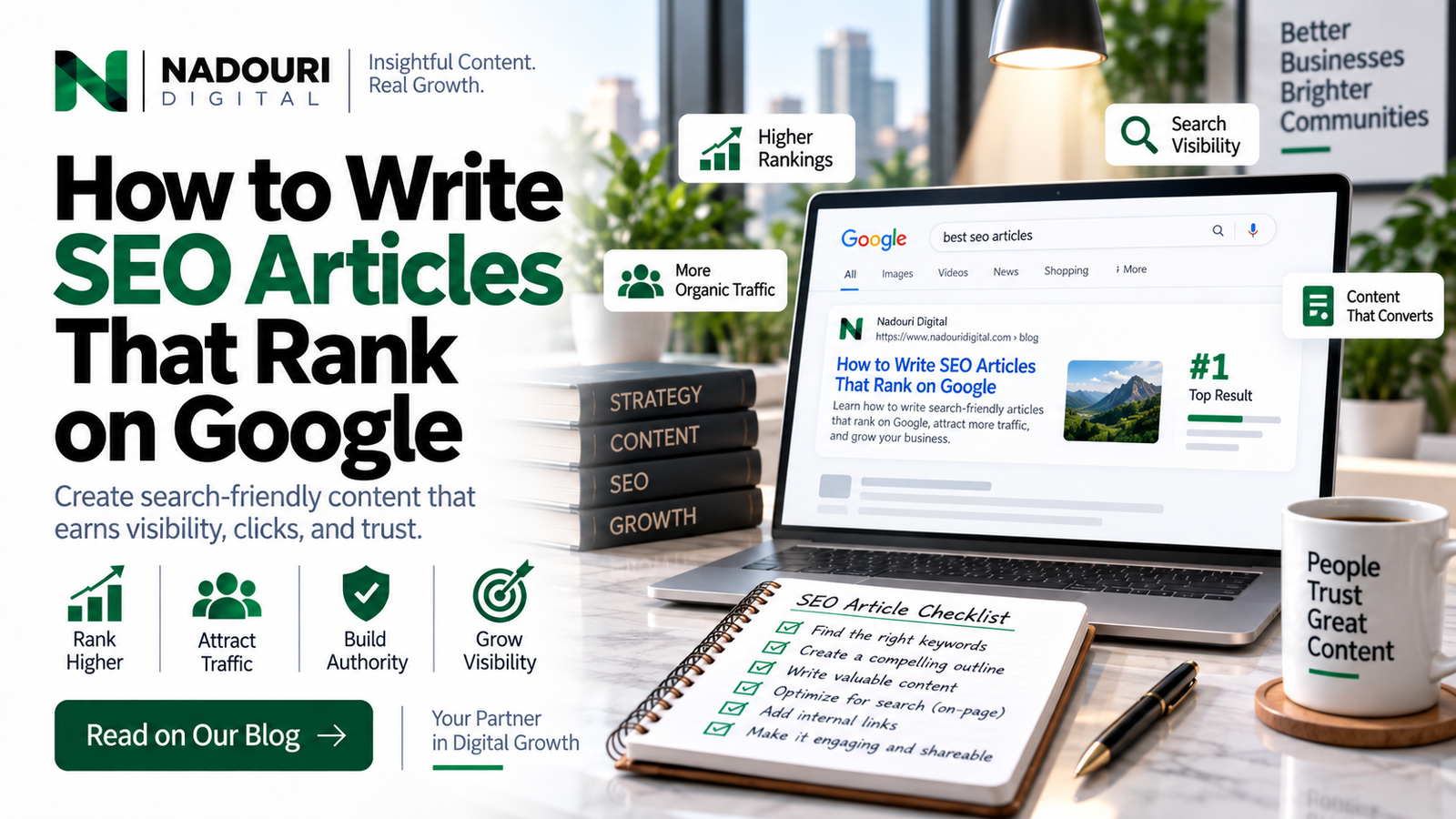
Pick Winnable Topics First
Ranking is decided before the writing starts. A brilliant article on an impossible keyword loses to a good article on a winnable one. Look for keywords where at least one page-one result is a forum thread, an old thin post, or a site with authority similar to yours. Those are gaps Google is waiting to fill with something better.
Build the Outline From the Top 10
Open the current top ten results and list every subtopic they cover. That list is your minimum viable outline — Google has already told you what a complete answer looks like. Then add what they missed: a step-by-step walkthrough, a comparison table, a downloadable checklist, or real examples from your own work.
- Cover every subtopic the top results share (the baseline)
- Add two or three subtopics none of them cover (your edge)
- Order sections by the reader’s journey, not by keyword volume
- Write headings as questions or promises a scanner can parse
Draft for Depth and Readability
Write the draft fast, then edit it twice: once for completeness, once for ease. Short paragraphs, concrete numbers, and examples beat elegant prose. Answer every heading directly in its first sentence — that sentence is what Google lifts into featured snippets and AI overviews.
Heading: “How long should an SEO article be?” First sentence: “Most competitive SEO articles land between 1,500 and 2,500 words — long enough to cover the topic completely, short enough to stay focused.” The rest of the section then explains and qualifies.
Optimize the Page Around the Article
A rankable article is surrounded by technical details: a title tag under 60 characters with the primary keyword near the front, a compelling meta description, a short clean URL, compressed images with descriptive alt text, and internal links both to and from related pages. None of these win rankings alone; together they are the difference between page one and page three.
The 90-Day Refresh Cycle
Almost no article ranks at its final position on day one. Publish, submit the URL in Search Console, then wait. At day 45, check impressions — rising impressions with low clicks means your title needs work. At day 90, expand sections where you rank positions 5–20, strengthen internal links, and update examples. Most articles we deliver reach their peak between months three and six, after one deliberate refresh.
Conclusion
Ranking articles are built, not wished into existence: winnable topic, complete outline, direct-answer drafting, disciplined on-page details, and a scheduled refresh. Follow this process for every article and page-one results become predictable. Or hand the process to Nadouri Digital LLC — our SEO article writing service handles research, writing and optimization end to end.