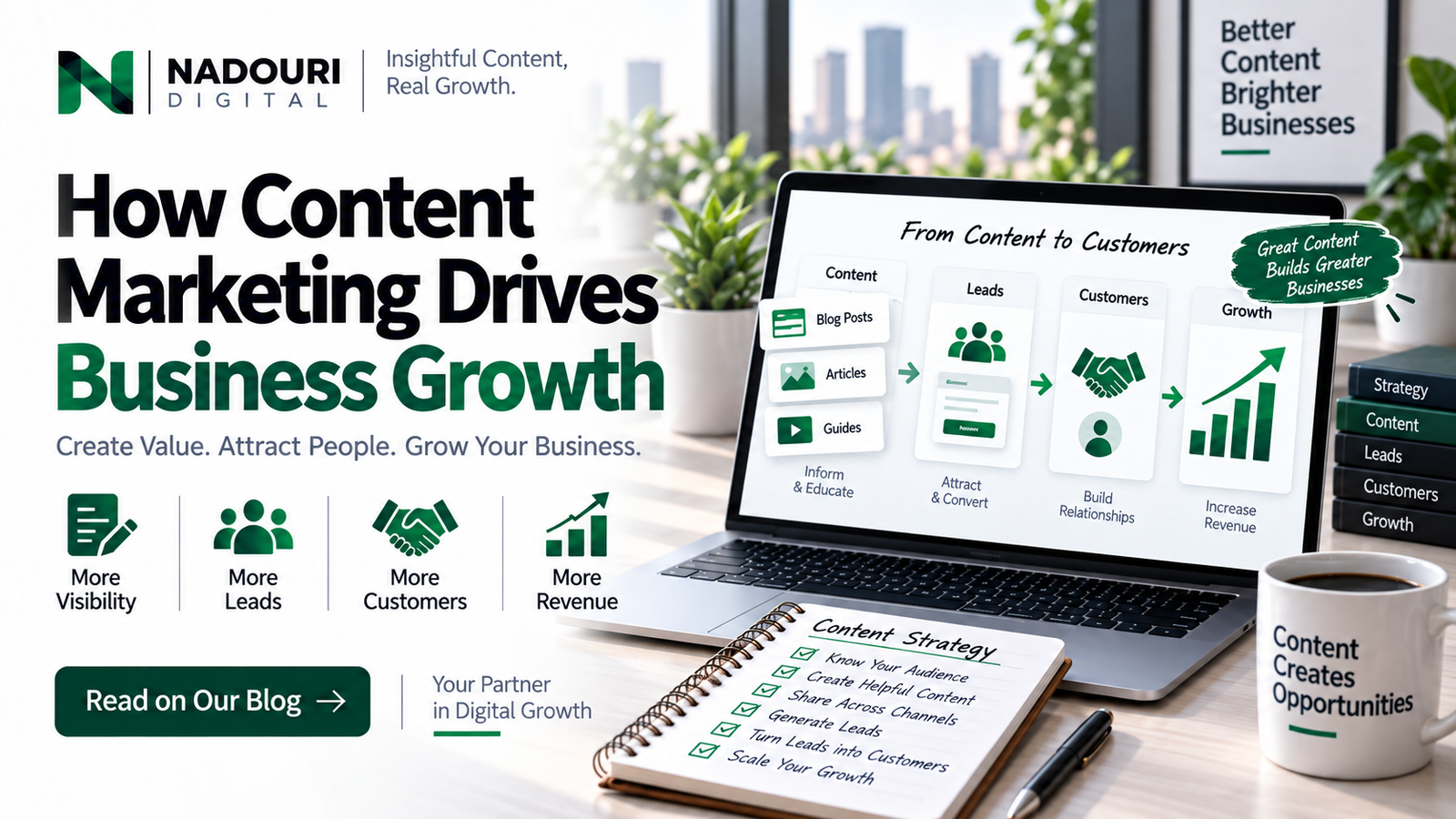
The Compounding Asset
Paid advertising rents attention: spend stops, traffic stops, nothing remains. Content builds an asset: an article ranking today still brings visitors in three years, and next quarter’s articles add to rather than replace it. This is the fundamental economics of content marketing — linear effort, compounding return. Businesses that grasp this stop asking “what does an article cost?” and start asking “what is a ranking worth annually, forever?”
The Four Growth Mechanisms
Content turns into revenue through four distinct mechanisms, and strategy means knowing which ones you are buying:
- Demand capture — ranking for searches with existing intent, the highest-converting traffic that exists
- Demand creation — content that reaches people before they search, building the market you will later harvest
- Trust at scale — every article answers the questions sales answers one-to-one, pre-selling thousands simultaneously
- Acquisition cost reduction — organic visitors cost nothing per click, and their trust is pre-built by the content itself
Trust Is the Conversion Layer
Visitors from search arrive skeptical; content is what converts skepticism into shortlists. A prospect who has read three of your guides arrives at the contact form pre-sold on your competence — the content did the credibility work the sales call used to do. This is why content-heavy businesses report shorter sales cycles and higher close rates: by the time a conversation starts, the buyer has already been educated by your best thinking.
A consultancy’s guide to “website copywriting costs” ranks, answers the pricing question honestly, and filters for serious buyers. Every enquiry it generates arrives knowing the ballpark and trusting the source — the guide is a salesperson that works every night and never invoices.
The Timeline Nobody Likes and Everybody Needs
Content marketing’s honest timeline: months one to three build foundations with little visible return; months four to six show early rankings and the first trickle of organic leads; months seven to twelve compound into meaningful pipeline; year two is where the asset pays multiples of its cost. Businesses that quit at month four abandon the investment one quarter before the inflection. The companies dominating your search results today simply started earlier and stopped less.
Measuring Growth Properly
Judge content on business metrics with correct attribution: organic sessions and rankings (leading indicators), leads and assisted conversions (content frequently opens journeys other channels close), pipeline influenced, and blended customer acquisition cost over time. First-click attribution hides content’s contribution; look at the whole journey and the trend across quarters, not the noise of single months.
Making the Economics Work
The businesses that win at content share three habits: they publish consistently rather than in bursts, they target winnable keywords instead of vanity terms, and they treat every article as a permanent asset to be updated and improved rather than a disposable post. Twenty excellent, maintained articles outperform two hundred abandoned ones — depth, freshness and interlinking are the maintenance that keeps the asset appreciating.
Conclusion
Content marketing grows businesses by building the only marketing asset that compounds: rankings that persist, trust that pre-sells, and an audience you own. The cost is patience measured in quarters; the return is measured in years. Nadouri Digital LLC builds these assets for clients — strategy, keyword targeting and the articles themselves, written to rank and written to sell.