Why Email Still Wins
Every other channel is rented. Algorithms throttle reach, ad costs climb, platforms die. Your email list is the one audience asset you own outright — portable between providers, unreachable by algorithm changes, and consistently the highest-ROI marketing channel ever measured, with industry studies routinely returning 36–42 dollars per dollar spent. For a small business, email is not one option among many; it is the foundation everything else feeds.
Building the List From Zero
A list grows when you trade value for addresses. The mechanics that work for small businesses:
- A lead magnet — one genuinely useful resource (guide, checklist, template, discount) behind a simple form
- Forms where intent already exists — website footer, end of blog posts, checkout, contact thank-you page
- A clear promise — what subscribers get and how often, stated in one sentence
- Offline capture — invoices, packaging, in-person events all offering the lead magnet
A good lead magnet passes the screenshot test: would a stranger screenshot it and send it to a colleague? A five-page “Ultimate Checklist” beats a fifty-page ebook nobody finishes.
The Three Emails Every Business Needs
Before newsletters, before promotions, three automated flows do the heavy lifting:
- Welcome sequence — three to five emails introducing your story, best resources and offer, triggered on signup
- Abandoned cart or enquiry follow-up — recovers revenue already one step from closing
- Post-purchase or post-project sequence — review request, cross-sell, referral ask
These flows run unattended and typically produce the majority of email revenue for small lists. Build them once, improve them quarterly.
Campaigns: What to Send and How Often
Consistency beats frequency. One useful email every week outperforms a burst of five followed by silence. A sustainable small-business calendar alternates three content types: teach (tips, guides, answers), show (case studies, new work, behind the scenes), and sell (offers, launches, availability). Two teaches and a show earn the right to a sell. Write like a person — plain text from a founder routinely outperforms designed newsletters for small lists.
The Metrics That Matter
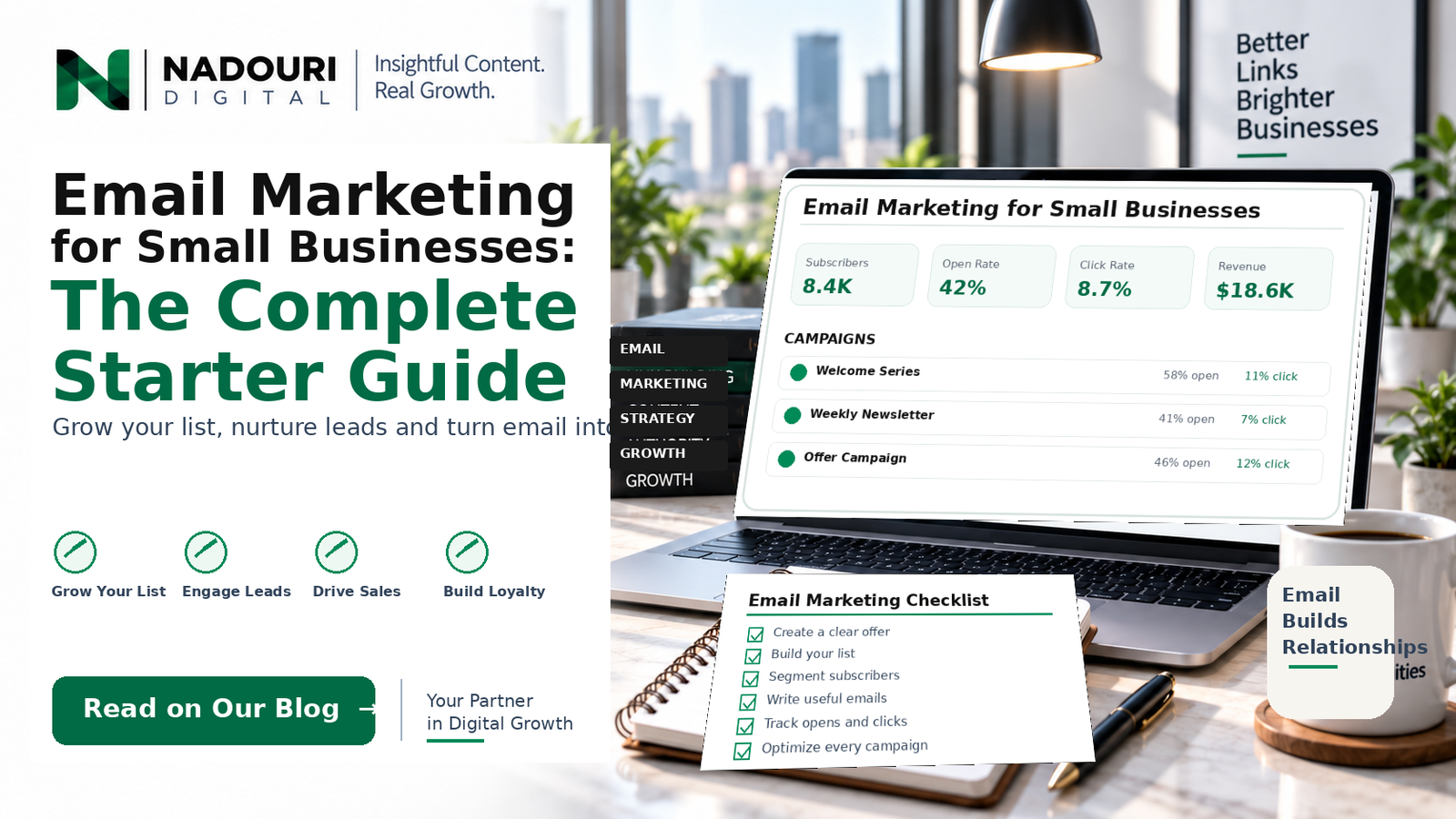
Four numbers run the channel: list growth rate (are you compounding?), open rate (are subject lines and sender reputation working?), click rate (is the content earning action?), and revenue per subscriber (is the list worth what you spend on it?). Unsubscribes under half a percent per send are healthy noise — a shrinking-but-engaged list beats a growing-but-dead one every time.
Staying Legal and Deliverable
Use double opt-in, honor unsubscribes instantly, include a real address in the footer, and never buy lists — purchased lists destroy sender reputation, which is the invisible asset that decides whether you reach the inbox or the spam folder. Deliverability is built slowly and lost in one bad import.
Conclusion
Email marketing for a small business is a simple machine: a reason to subscribe, three automated flows, one useful email a week, four metrics reviewed monthly. Build it properly once and it pays for years. Nadouri Digital LLC writes the copy that makes the machine work — lead magnets, welcome sequences and campaigns in your voice.